Sub-Collection: Tasmanian postmarks with a mining or mineral connection.
This purple‑shade 2d Hobart Pictorial, cancelled Back Creek in the early 1900s, is part of Tasmania’s landmark Pictorial series of 1899–1912 — engraved scenic definitives that were among the first in the British Empire to depict local landscapes rather than monarchs. While the stamp itself shows Hobart’s waterfront, its postal‑history significance lies in the Back Creek postmark, a locality with a long‑running Post Office and strong mining connections through gold and slate workings. Clear strikes from rural mining districts make excellent additions to my Mining and Mineral Postmarks collection.
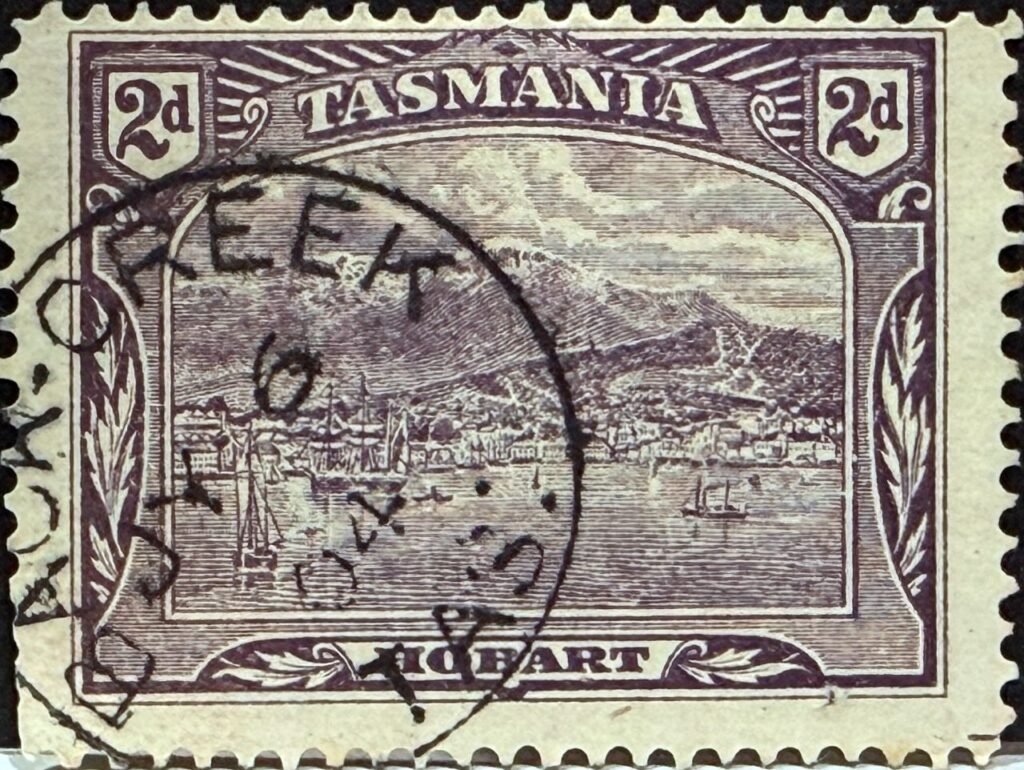
Stamp Details
Country: Tasmania (pre‑Federation issue)
Series: Pictorials (1899–1912)
Denomination: 2d
Subject: Hobart waterfront
Colour: Purple / Violet
Year of Issue: 1899
Notable Feature: The design is printed slightly off‑centre relative to the perforations, a common but interesting production characteristic of the Pictorial series.
The 2d Hobart Pictorial was widely used for domestic mail, but Back Creek strikes are not common, making this a desirable locality example. Back Creek Post Office operated from 1870 to 1959, giving it a long and continuous postal history across the late colonial and early Commonwealth periods. The cancellation is readable enough to confirm the locality, which is valuable given the small size of the office. Multiple colour shades exist for the 2d value and this example is a mid‑period purple typical of early 20th‑century printings. The off‑centre printing is typical of the era’s manual perforating and alignment processes and adds character to the piece. The combination of a scenic pictorial and a locality with active mining operations makes this a strong addition to my sub‑collection.
Back Creek
Back Creek, in Tasmania’s northeast, is a long‑established rural locality with a notable mining history. The district hosts an active gold mine, continuing a tradition of small‑scale gold extraction that dates back to the late 19th century. A slate quarry in the area also produced material of geological interest, including phosphate minerals occurring in fractures and weathered zones. The Back Creek Post Office, operating from 1870 to 1959, served miners, farmers, and local residents for nearly ninety years. Today, Back Creek remains an important locality for Tasmanian mineral collectors and a valuable addition to my mining‑postmark exhibit.
