Sub-Collection: Tasmanian and other regions, postmarks with a mining or mineral connection.
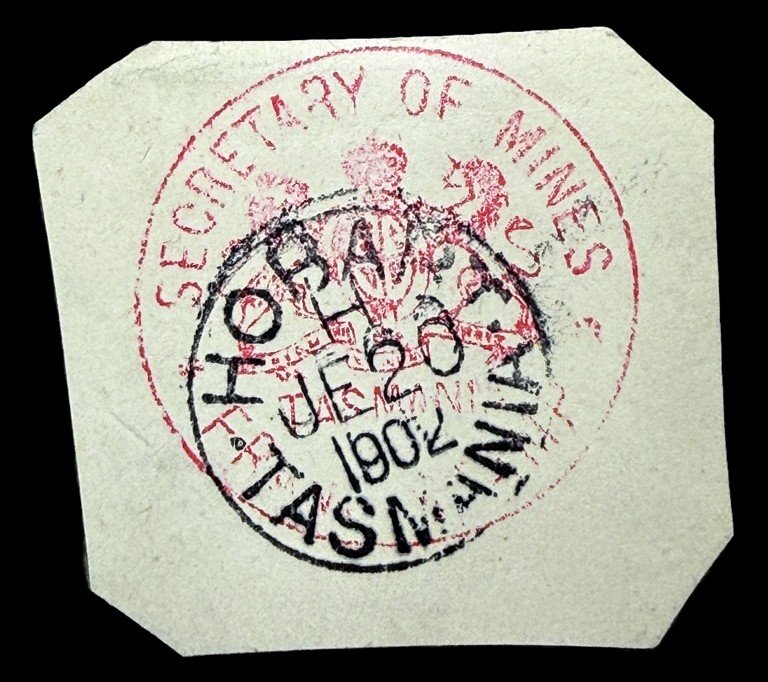
This piece shows a striking combination of a Tasmania Secretary of Mines departmental handstamp overstruck by a Hobart circular date stamp (CDS) dated 26 June 1902. Although no postage stamp is present, the item is a superb example of official departmental mail from the mining administration. Departmental cachets are far scarcer than regular postal cancellations, and the dual strike makes this an especially attractive artefact.
Departmental Handstamp Details
Department: Secretary of Mines, Tasmania
Type: Official red handstamp
Design: Colonial coat of arms with lion and unicorn supporters
Usage: Applied to official government correspondence relating to mining administration
Period: Early 1900s (this example dated 1902)
The bottom word is FRANK STAMP. This was commonly used on departmental mail to indicate that the item was officially authorised and did not require adhesive postage.
Departmental franks from the Secretary of Mines are highly desirable for mining‑themed collections. The combination of a government mining handstamp and a standard Hobart CDS is unusual and visually appealing. Official franks were used instead of adhesive stamps, making this a legitimate postal artefact despite the absence of a postage stamp. The 1902 date places this during a period of intense mining activity in Tasmania — Mount Lyell, Zeehan, Dundas, and Beaconsfield were all in full swing. Items like this are often found only in archives, and surviving examples in private collections are scarce.
Hobart
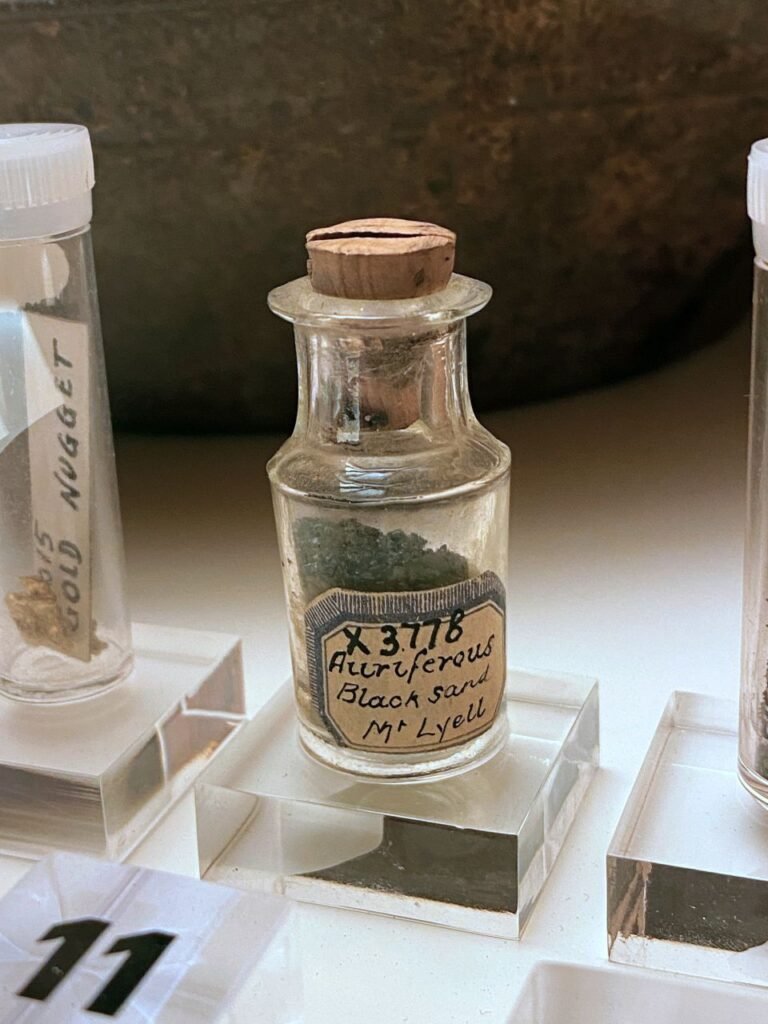
In addition to the Mines Department, Hobart also hosts the Tasmanian Museum and Art Gallery. In the museum, there is a small display of mineral specimens, and a room containing a display of mining and geological artefacts including this bottle of “auriferous black sand” from the William Frederick Petterd collection.